Guides Materials
Dekton vs porcelain vs natural stone: choosing a luxury benchtop
How to choose between Dekton, porcelain and natural stone for a luxury kitchen benchtop - the real differences in look, durability, cost and where each one wins.
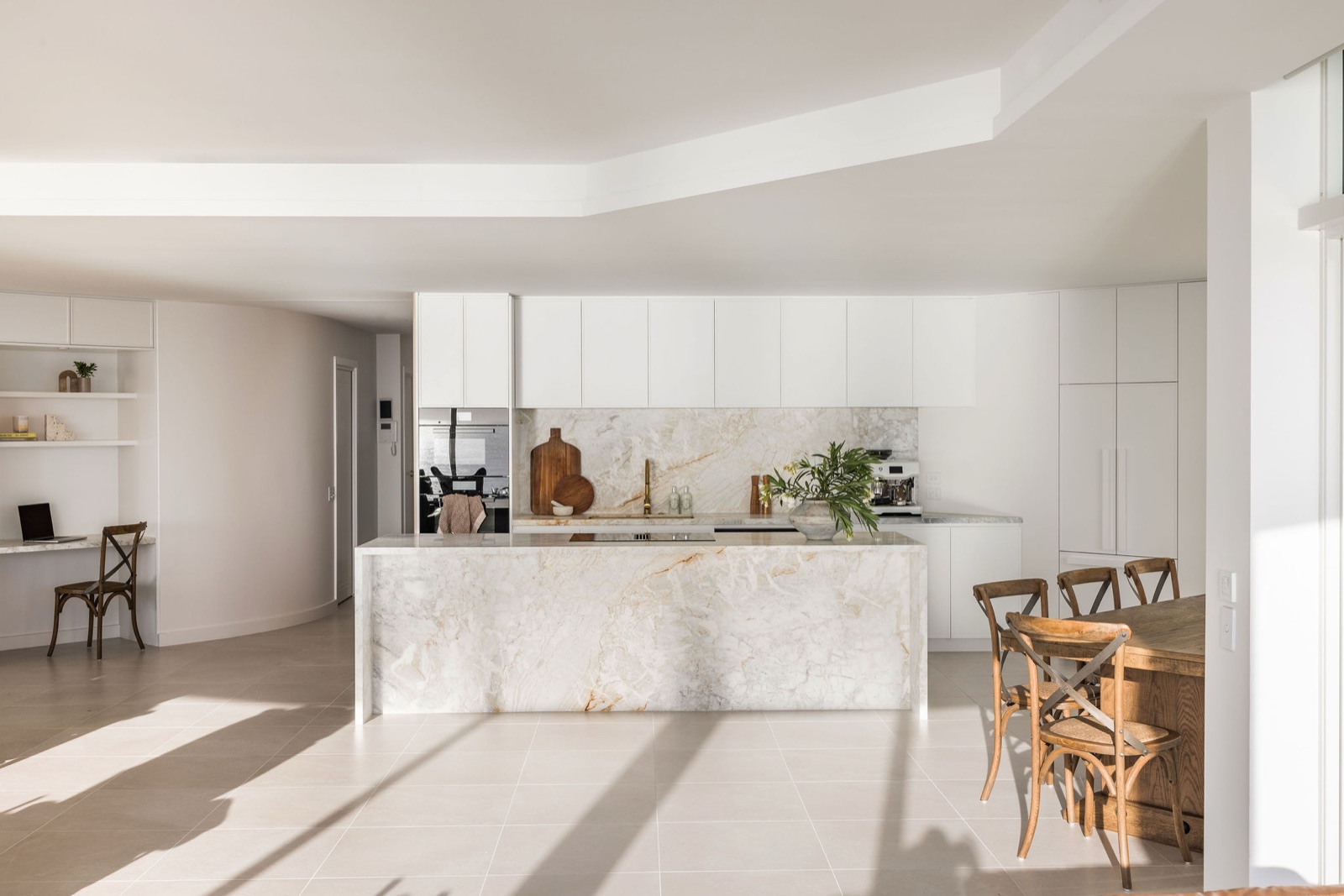
With engineered stone off the table since 2024, a luxury kitchen benchtop now comes down to three materials: natural stone, porcelain and sintered stone (Dekton being the best-known sintered brand). They’re all excellent - the right choice depends on the look you want, how you live, and where the benchtop goes.
Here’s how they actually compare.
The short version
| Natural stone | Porcelain | Dekton / sintered | |
|---|---|---|---|
| Look | Unique veining, real depth | Consistent, can mimic stone | Consistent, ultra-modern |
| Hardness | Varies (quartzite hard, marble soft) | Very hard | Hardest |
| Heat | Excellent | Excellent | Excellent |
| Scratch / stain | Seal needed; marble can etch | Highly resistant | Near bulletproof |
| UV / outdoor | Most are fine | Yes | Yes - best for alfresco |
| Edges / thickness | Thick slabs, classic edges | Slim, large format | Slim, large format |
| Maintenance | Periodic sealing | Minimal | Minimal |
| Feel | Natural, characterful | Engineered, clean | Engineered, clean |
Natural stone - the most beautiful
Marble, quartzite, granite and limestone are the original luxury benchtop, and nothing engineered quite matches the depth and movement of a real slab. Every piece is one of a kind, which is exactly the appeal - a book-matched marble island is a centrepiece you can’t replicate.
The trade-off is care. Softer stones like marble and limestone can etch (a dull mark from something acidic) or stain if a spill sits, so they reward owners who wipe up and like a stone that ages with the home. Quartzite and granite are far harder and very forgiving while still being genuine natural stone - often the sweet spot for a working kitchen that still wants the real thing.
Porcelain - the all-rounder
Porcelain benchtops (Neolith, Laminam and others) are made by firing natural minerals into a dense, large-format slab. They’re extremely hard, heat- and scratch-resistant, UV-stable and almost maintenance-free, and they come in slim profiles for a sharp, modern edge. Many convincingly mimic marble or concrete if you want that look with none of the upkeep.
The character is more uniform than natural stone - which some people prefer and others find a little flat. For a busy family kitchen that wants a stone look without the sealing, it’s hard to beat.
Dekton and sintered stone - the toughest
Dekton is Cosentino’s sintered-stone brand, made under even higher heat and pressure than standard porcelain. The result is about as durable as a benchtop gets: heat, scratch, stain and UV barely touch it, and large slim slabs let you run a waterfall island or a wraparound with minimal joins. It’s the material we most often reach for in an outdoor or alfresco kitchen, where sun and weather rule out a lot of options.
Like porcelain, the look is engineered-consistent rather than naturally varied - the price of that toughness.
So which should you choose?
There’s rarely one answer - the best luxury kitchens mix them. A common pairing is a statement natural-stone island for the look you fall in love with, and hard-wearing porcelain or sintered stone on the perimeter runs and the alfresco where durability matters most.
We bring real samples to the design package and choose with you, against your kitchen and how you’ll use it. Book a consultation and we’ll help you land on the right surface - or see the full range on our Surfaces & Materials page.