Guides Materials
What replaced engineered stone? A 2026 guide to benchtop materials
Engineered stone was prohibited across Australia from July 2024. Here's what replaced it for luxury kitchens - natural stone, porcelain and Dekton - and whether Caesarstone is banned.
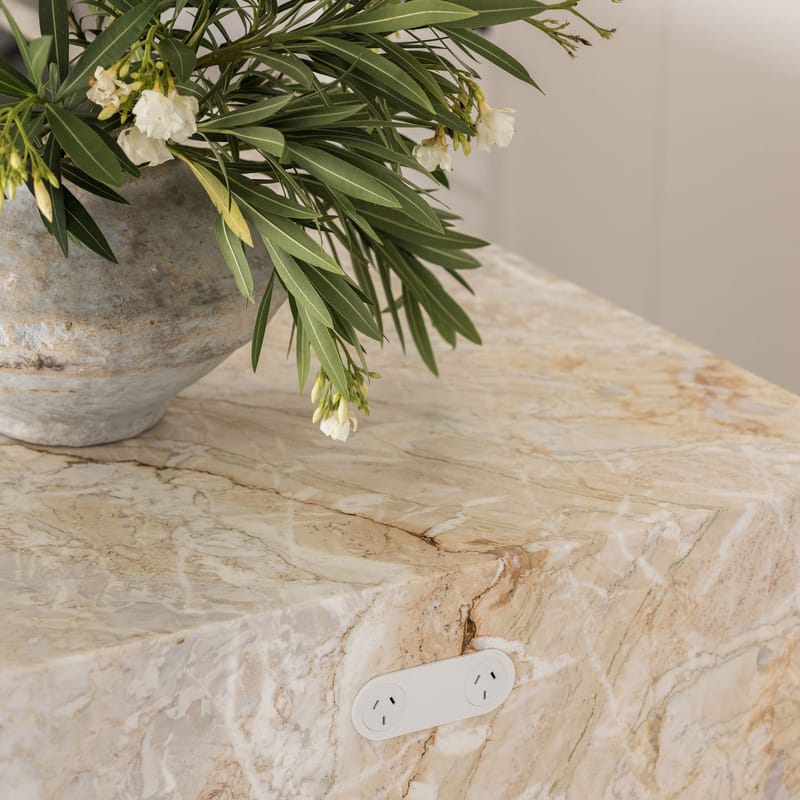
From 1 July 2024, Australia became the first country in the world to prohibit the manufacture, supply, processing and installation of engineered stone - the manufactured quartz product that had become the default kitchen benchtop for two decades. If you’re renovating in 2026, it’s simply no longer an option, and the question is what to use instead.
The short answer: natural stone, porcelain and sintered stone have replaced it - the materials a luxury kitchen tended to want anyway.
Why engineered stone was banned
Engineered stone is made by binding crushed quartz with resin. Cutting and grinding it releases very fine crystalline silica dust, and inhaling that dust over time causes silicosis - an irreversible, sometimes fatal lung disease. As the material boomed, silicosis rates among Australian stonemasons rose sharply, often in workers still in their thirties.
In late 2023 the country’s work health and safety ministers agreed to prohibit the use of all engineered stone, and the ban took effect from 1 July 2024 (with short transitional arrangements in some states). It covers engineered stone benchtops, panels and slabs regardless of their silica content.
Is Caesarstone banned?
This is the question we hear most. Caesarstone is a brand of engineered (manufactured) stone, so its traditional products are covered by the ban along with every other manufactured-quartz benchtop - Essastone, Quantum Quartz and the rest. It’s the product category that’s prohibited, not the brand name. Some suppliers have since pivoted toward porcelain and lower-risk mineral surfaces, but if you’re specifying a benchtop today, you’d be choosing from the materials below.
What replaced it
For luxury kitchens, the engineered-stone gap is filled by four materials - none of them new, all of them arguably better:
- Natural stone (marble, granite, quartzite) - the original luxury benchtop. Unique veining, genuine depth, and a material with real provenance. Quartzite in particular is extremely hard-wearing.
- Porcelain and sintered stone (Dekton, Neolith, Laminam) - engineered from natural minerals and fired, not resin-bound. Exceptionally hard, heat- and scratch-resistant, UV-stable (so it works outdoors), and available in large-format slabs with slim edges.
- Solid timber - warmth and craft, used for islands, breakfast bars and feature joinery rather than wet zones.
- Stainless steel - the professional, hygienic choice for sculleries and serious cooks.
In practice, most of our kitchens land on natural stone or a porcelain/sintered surface, often combining the two - a statement stone island with a hard-wearing porcelain on the working runs.
Is it still safe to work with stone?
Yes. Natural stone and porcelain still contain silica, but they aren’t engineered stone and aren’t covered by the ban. They’re cut and installed using the same controls that apply across the trade - wet-cutting, dust extraction, proper PPE - which our fabricators and installers follow as standard. As a finished, sealed benchtop in your home, there’s nothing to manage and nothing to worry about.
What we use, and why
We work only with materials that are fully compliant with current Australian standards - natural stone, porcelain, Dekton and timber - and we guide every selection in the design package. These were the surfaces a high-end kitchen aspired to before the ban; they’re simply the standard now.
You can see the full range on our Surfaces & Materials page, or book a consultation and we’ll help you choose the right benchtop for your kitchen.